

*If you’re looking for my most recent free newsletter with tons of writing resources, it can be found here.*
*And don’t forget to listen to the latest episodes of The Long Road to Publishing!*
Classic novels vs current novels
(Yeah, yeah, I’m getting creative with my Fabulous First Page posts. You want me to do a regular one? Suggest a recent book with a fabulous first page to showcase!)
Anyway, recently in my Fabulous First Pages class at The Writer’s Center, we discussed what every first page should try to accomplish, with the caveat that these are the expectations for books being published now. When you look at classic novels, they don’t always follow these “rules.”
The first page should:
Hook the reader right away and invite them into the story. (Of course, this depends on the type of reader you’re trying to attract. What hooks a sci-fi reader might be different from what hooks a romance-reader.)
Set the scene and the overall tone of the novel.
Introduce a main character (and/or introduce a main setting or theme).
Hint at a conflict, situation, mystery/secret, or question.
Plant curiosity seeds (I’m borrowing this term from
of )— things make readers curious, but not overly-confused!Set reader expectations. (For example, a funny book should be funny on page 1; a scary book should have hints of spookiness of page one.)
Why don’t classic novels follow these first page “rules”?
My guess is that back in the day, readers were more willing to give a book a chance and “wait” for it to get good. Readers back then didn’t have smart phones or Netflix or, if we’re going way back, television or radio as other options for entertainment. So books could often get away with a slow start.
Not the case these days. Unless you are an established and beloved author with a fan base who will stick with you, you need to hook the reader (or agent or editor) right away or they will put your book down and pick up their phone (or a different book).
The first assignment I gave my class:
I told my students to bring in a classic novel with a great opening page, and a classic novel with a not-so-engaging first page. My example of a classic with a great opening page was:
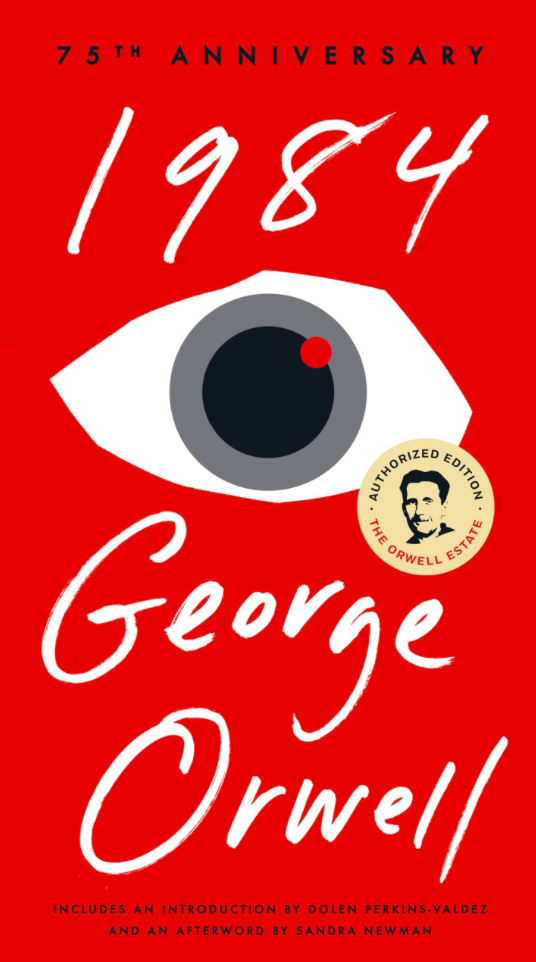
1984 by George Orwell
Chapter 1:
It was a bright cold day in April, and the clocks were striking thirteen. Winston Smith, his chin nuzzled into his breast in an effort to escape the vile wind, slipped quickly through the glass doors of Victory Mansions, though not quickly enough to prevent a swirl of gritty dust from entering along with him.
The hallway smelt of boiled cabbage and old rag mats. At one end of it a coloured poster, too large for indoor display, had been tacked to the wall. It depicted simply an enormous face, more than a metre wide: the face of a man of about forty-five, with a heavy black moustache and ruggedly handsome features. Winston made for the stairs. It was no use trying the lift. Even at the best of times it was seldom working, and at present the electric current was cut off during daylight hours. It was part of the economy drive in preparation for Hate Week. The flat was seven flights up, and Winston, who was thirty-nine and had a varicose ulcer above his right ankle, went slowly, resting several times on the way. On each landing, opposite the lift-shaft, the poster with the enormous face gazed from the wall. It was one of those pictures which are so contrived that the eyes follow you about when you move. BIG BROTHER IS WATCHING YOU, the caption beneath it ran.
I mean… don’t we all remember that opening line from high school English class?
In this first page, Orwell is doing all the right things:
hooking us right away with clocks that strike thirteen.
placing us immediately in a scene (with sensory details — the smell of boiled cabbage!) and introducing us to the main character (poor Winston with his varicose ulcer).
planting plenty of curiosity seeds (what is Hate Week??).
setting a gritty, ominous tone.
And, of course, he’s hinting at the conflict of the whole book with the poster: BIG BROTHER IS WATCHING YOU.
Some other books with great opening pages that my students brought to class included The Bell Jar by Sylvia Plath and The House of Mirth by Edith Wharton.
I’m not going to share (yet!) my example of a classic novel with a stinker of a first page. Honestly, there are plenty to choose from. I’m not trying to dump on classic novels, but reader tastes and expectations have changed, and I think there are a large number of classic novels that wouldn’t have made it out of the slush pile were they submitted today, at least not in their current state or with their current first page.
The second assignment I gave my class:
I told my students to take the classic novel they’d brought in as an example of a not-so-great first page and rewrite it in a way that would grab a modern reader’s attention. In other words, rewrite it so it checks all of the boxes above.
I told them I would do the assignment myself with the example I’d brought. And so I set about, in the fifteen minutes I’d given to my students, to rewrite the opening page of one of the most famous and beloved classic novels of all time. A novel that I happen to adore, but I feel doesn’t really get going until page 7.
(And, BTW, if your book doesn’t really get going until page 7, I’d recommend either cutting those first six pages or rethinking them completely.)
The Classic Novel I Chose to Rewrite:
Keep reading with a 7-day free trial
Subscribe to Eva's Newsletter for Writers to keep reading this post and get 7 days of free access to the full post archives.